
Healthcare Without the Headaches: Automating Patient Bookings and FAQs with AI

Healthcare Without the Headaches: Automating Patient Bookings and FAQs
Running a healthcare practice is incredibly rewarding, but let's be honest—it can also be a logistical nightmare. Between managing patient records, dealing with insurance claims, and ensuring everyone gets the care they need, the last thing your team needs is to be bogged down by ringing phones and endless scheduling conflicts. If you've ever felt like your clinic is drowning in administrative tasks, you are not alone. The good news is that the solution isn't hiring more staff or working longer hours; it's about working smarter with the right technology.
Today, we are going to dive deep into how AI for healthcare is revolutionizing the way clinics operate. Specifically, we'll explore how medical appointment scheduling and clinic automation can completely transform your patient communication, freeing up your team to focus on what truly matters: providing excellent care. Grab a cup of coffee, and let's talk about how you can run a more efficient, less stressful practice.
The Heavy Toll of Administrative Burden in Healthcare
Before we look at the solutions, it's important to understand the scope of the problem. Administrative tasks are one of the leading causes of burnout among healthcare professionals. When your front desk staff spends the majority of their day answering repetitive questions—like "What are your hours?" or "Do you accept my insurance?"—they have less time to provide a warm, welcoming experience for the patients standing right in front of them.
Moreover, manual medical appointment scheduling is prone to human error. Double bookings, missed cancellations, and scheduling gaps not only frustrate patients but also cost your practice valuable time and revenue. According to recent studies on healthcare efficiency, administrative costs account for a significant portion of total healthcare spending in the United States. It's a system ripe for innovation, and that's exactly where AI steps in.

Enter AI for Healthcare: Your New Digital Assistant
When you hear "AI for healthcare," you might picture futuristic robots performing surgery. While AI is certainly making strides in clinical diagnostics, its most immediate and impactful application for the average practice is in clinic automation. Think of AI not as a replacement for your human staff, but as a tireless, incredibly efficient digital assistant that handles the busywork so your team doesn't have to.
One of the most powerful tools in this space is the AI receptionist. Unlike a traditional answering service or a basic interactive voice response (IVR) system that frustrates callers with endless menus, a modern AI receptionist uses natural language processing to understand and converse with patients just like a human would. It can answer calls 24/7, meaning you never miss an opportunity to connect with a patient, even after hours or during busy periods.
Streamlining Medical Appointment Scheduling
Let's talk about the core of your practice's operations: getting patients in the door. Medical appointment scheduling is traditionally a time-consuming back-and-forth process. A patient calls, the receptionist checks the calendar, offers a few times, the patient checks their own schedule, and eventually, a slot is agreed upon.
With clinic automation, this entire process is streamlined. An AI system can integrate directly with your practice management software. When a patient calls or visits your website to book an appointment, the AI instantly cross-references availability and secures the booking in real-time.
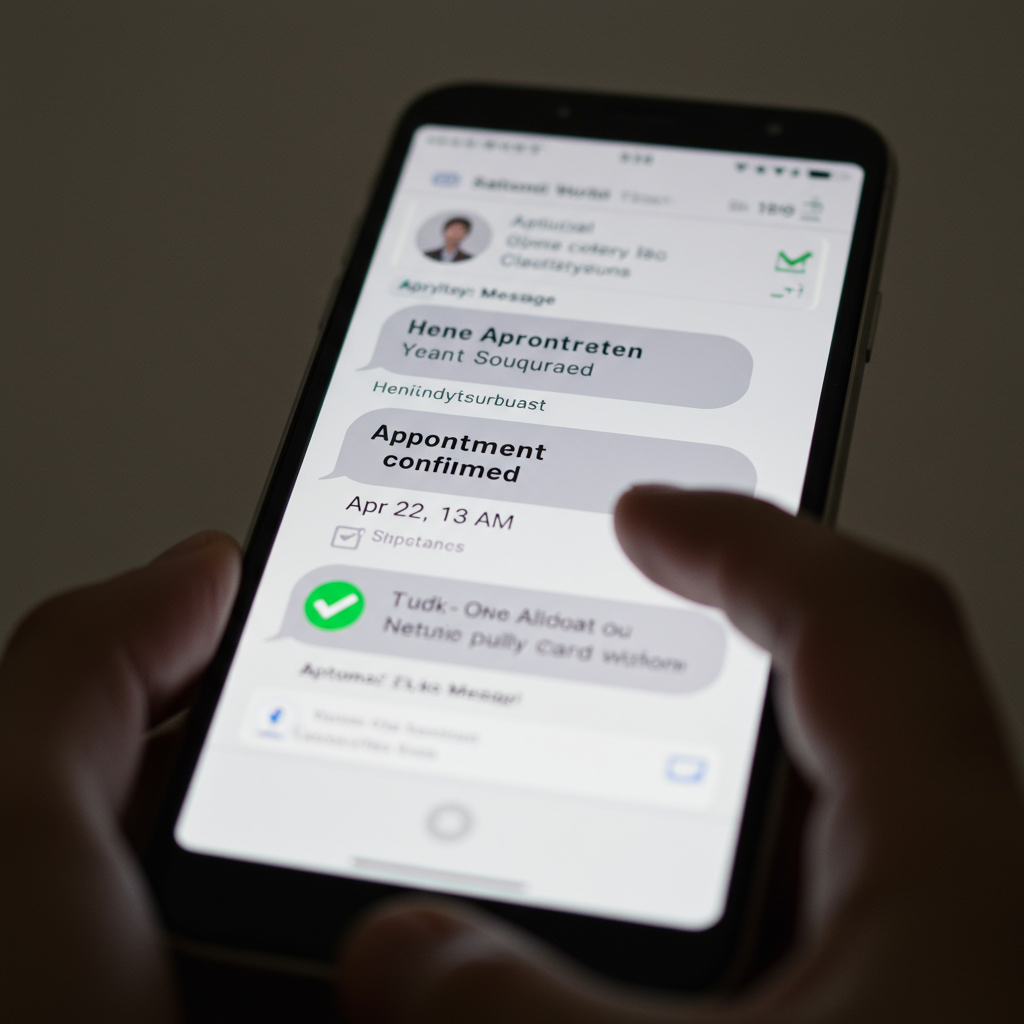
But it doesn't stop there. The system can automatically send confirmation texts or emails, followed by timely reminders as the appointment approaches. This dramatically reduces no-show rates, which is a major pain point for many clinics. If a patient needs to reschedule, they can do so effortlessly through the automated system, which immediately opens up that slot for someone else. It's a seamless, frictionless experience that modern patients not only appreciate but have come to expect.
Transforming Patient Communication and FAQs
How much time does your staff spend answering the exact same questions every single day? "Where are you located?" "What should I bring to my first appointment?" "How long does a typical consultation take?"
While these questions are important to the patient, answering them manually is a drain on your clinic's resources. This is where AI truly shines in enhancing patient communication. By setting up an intelligent FAQ system—whether via a chat widget on your website, SMS, or an AI voice assistant—you can provide patients with instant, accurate answers to their most common queries.
This level of clinic automation ensures that patients get the information they need immediately, without having to wait on hold. It empowers them to manage their own healthcare journey more effectively. Meanwhile, your front desk staff is liberated from the monotony of repetitive questions, allowing them to focus on complex patient needs, billing issues, and providing compassionate, face-to-face service.
For more insights on how automation can elevate your customer service, check out our guide on [Internal Link 1: The Ultimate Guide to CRM Automation for Small Businesses].
The Ripple Effect of Clinic Automation
Implementing AI for healthcare doesn't just solve isolated problems; it creates a positive ripple effect throughout your entire practice.
First and foremost, it improves the patient experience. In today's on-demand world, patients expect convenience. When they can easily book an appointment online at 10 PM or get a quick answer to a question without waiting on hold, their satisfaction skyrockets. Happy patients are more likely to return, leave positive reviews, and refer their friends and family.
Secondly, it boosts staff morale. When you remove the tedious, repetitive tasks from your team's workload, they feel more valued and less stressed. They can focus on the human elements of healthcare that require empathy and critical thinking—skills that no AI can replicate.
Finally, clinic automation drives revenue growth. By reducing no-shows, optimizing your schedule to eliminate gaps, and capturing every lead that contacts your practice, you maximize your clinic's earning potential. You're no longer losing money simply because the phone line was busy.

Overcoming the Fear of New Technology
It's natural to feel a bit apprehensive about adopting new technology, especially in a field as sensitive as healthcare. You might worry about data security, HIPAA compliance, or the learning curve for your staff.
These are valid concerns, but they shouldn't hold you back. The best AI solutions designed for healthcare are built with strict security protocols and are fully HIPAA compliant, ensuring that patient data is always protected. Furthermore, modern clinic automation tools are designed to be intuitive and user-friendly. They integrate seamlessly with the systems you already use, minimizing disruption during the transition phase.
The key is to partner with a technology provider who understands the unique challenges of the healthcare industry and can guide you through the implementation process step-by-step. To understand how we handle data and integration seamlessly, you might want to read our article on [Internal Link 2: Seamlessly Integrating AI with Your Existing Tech Stack].
Getting Started with AI in Your Practice
So, how do you actually get started with automating your patient bookings and FAQs? The first step is to identify your biggest bottlenecks. Is your staff spending too much time on the phone? Are your no-show rates too high? Do patients frequently complain about not being able to reach you?
Once you've pinpointed the pain points, you can look for targeted solutions. Start small if you need to. Perhaps begin by implementing an automated reminder system or a simple chatbot on your website for FAQs. As you and your team become more comfortable with the technology and start seeing the benefits, you can gradually introduce more comprehensive clinic automation tools, like a full AI voice receptionist.
Remember, the goal isn't to change how you practice medicine; it's to change how you manage the business of medicine. By embracing AI for healthcare, you are investing in the longevity and success of your practice.
For a deeper dive into scaling your operations efficiently, explore our thoughts on [Internal Link 3: Scaling Your Business Operations with AI-Driven Insights].
Conclusion: A Healthier Future for Your Practice
In conclusion, the administrative headaches that have long plagued healthcare practices don't have to be a permanent fixture. By leveraging AI for healthcare, you can dramatically improve your medical appointment scheduling, streamline clinic automation, and elevate your patient communication.
The result is a practice that runs like a well-oiled machine—where patients feel cared for and respected, staff are engaged and productive, and the bottom line is healthy. The future of healthcare administration is automated, and the practices that adopt these technologies now will be the ones that thrive in the years to come.
Ready to see how Nova can transform your business and capture every lead? Contact us at (980) 485-5303 or visit our website at www.keyconnectai.com for local business insights. You can also reach out to us via email at [email protected].
AI DISCLAIMER:This article was written by Nova AI, the AI-powered assistant of KeyconnectAI. While every effort has been made to ensure the accuracy and relevance of the information provided, this content was produced using artificial intelligence without direct human editorial oversight. The information contained herein is intended for general informational purposes only. KeyconnectAI and Nova AI are not responsible for any errors, omissions, or outcomes resulting from the use of this content. We encourage readers to independently verify any specific claims, statistics, or recommendations before making business decisions.