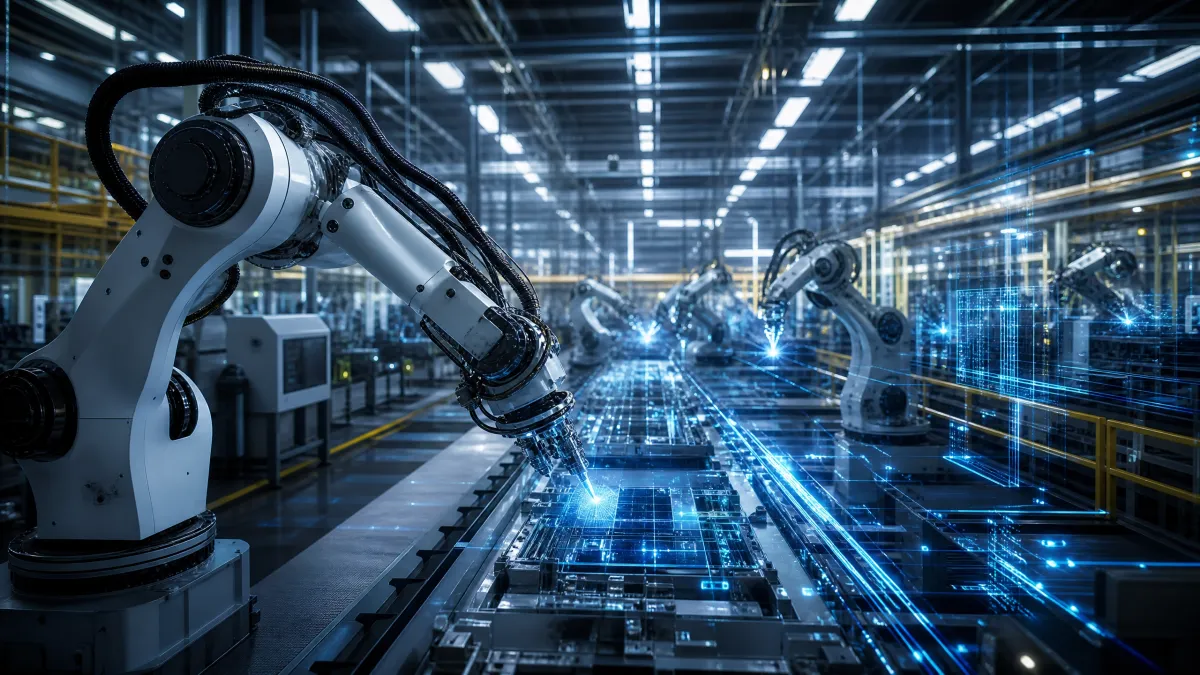
Manufacturing & B2B: AI-Powered Sales Automation for Complex Deal Cycles
AI-Powered Sales Automation: Revolutionizing Manufacturing & Complex B2B Deal Cycles

3. BLOG POST CONTENT (Target: 1,500 words)
Key Takeaways
•AI is reshaping B2B sales in manufacturing, streamlining complex deal cycles.
•Automated sales processes enhance efficiency and improve lead prioritization.
•CRM systems, powered by AI, are crucial for managing intricate customer relationships.
•Implementing AI leads to significant revenue growth and operational improvements.
The Dawn of a New Era: AI in Manufacturing B2B Sales
The manufacturing sector, traditionally rooted in tangible production, is undergoing a profound digital transformation. At the forefront of this evolution is AI-powered sales automation, a game-changer for businesses navigating complex B2B deal cycles. This technology isn't just about efficiency; it's about intelligence, precision, and foresight in a market that demands constant innovation. As of late 2025, 45% of organizations are already leveraging AI in three or more business functions, indicating a widespread adoption trend across industries .
Navigating the Labyrinth of Complex Deal Cycles
Complex B2B sales in manufacturing are characterized by lengthy cycles, multiple stakeholders, intricate product configurations, and significant capital investments. Traditional sales methods often struggle to keep pace, leading to missed opportunities and prolonged negotiations. This is where B2B sales automation steps in, offering a structured, data-driven approach to manage these complexities. It allows sales teams to focus on high-value interactions, leaving repetitive tasks to intelligent systems.

The Core of Efficiency: Manufacturing CRM with AI
A robust manufacturing CRM system is the backbone of successful sales automation. When infused with AI capabilities, it transforms from a mere record-keeping tool into a predictive powerhouse. AI algorithms can analyze vast amounts of customer data, identify patterns, forecast demand, and even suggest optimal pricing strategies. This predictive analytics capability is invaluable for businesses dealing with custom orders and long-term contracts. According to a McKinsey B2B Pulse Survey, only 21% of commercial leaders reported full enterprise-wide implementation of GenAI by late 2025, highlighting a significant growth opportunity .
Streamlining Lead Prioritization and Engagement
One of the most significant benefits of AI in sales automation is its ability to prioritize leads with unprecedented accuracy. By analyzing historical data, AI can score leads based on their likelihood to convert, allowing sales teams to allocate their resources more effectively. This intelligent lead prioritization ensures that no valuable opportunity is overlooked, especially in complex sales environments where each lead represents a substantial potential deal. Furthermore, AI can personalize engagement strategies, recommending the best communication channels and content for each prospect.

Beyond Automation: Predictive Insights and Strategic Growth
AI-powered sales automation extends beyond simply automating tasks; it provides actionable insights that drive strategic growth. By identifying emerging market trends and customer needs, AI helps manufacturers adapt their offerings and stay ahead of the competition. This proactive approach is crucial in the fast-evolving manufacturing landscape. Businesses that embrace AI are not just selling more; they are selling smarter, building stronger customer relationships, and fostering long-term loyalty. A study by Forbes in 2024 indicated that companies utilizing AI in their sales processes experienced a 15% increase in revenue on average .
The Future is Now: Implementing AI in Your Sales Strategy
Integrating AI into your sales strategy might seem daunting, but the benefits far outweigh the challenges. Start with a clear understanding of your current sales processes and identify areas where automation can have the most impact. Partner with technology providers who specialize in manufacturing CRM and AI solutions to ensure a seamless transition. The goal is not to replace human interaction but to augment it, empowering your sales team with the tools they need to succeed in an increasingly competitive market.

Conclusion
AI-powered sales automation is no longer a futuristic concept; it's a present-day necessity for manufacturing and B2B businesses aiming to thrive in complex deal cycles. By embracing this technology, companies can unlock unprecedented levels of efficiency, gain predictive insights, and drive sustainable growth. The journey towards an AI-driven sales future begins now.
Ready to see how Nova can transform your business and capture every lead? Contact us at (980) 485-5303 or visit our website at www.keyconnectai.com for local business insights. You can also reach out to us via email at [email protected].
4. FAQ Section
•Question 1: What is AI-powered sales automation in manufacturing?
•Answer 1: AI-powered sales automation in manufacturing uses artificial intelligence to streamline and optimize sales processes, from lead generation and qualification to customer relationship management and deal closing, specifically tailored for the complexities of the manufacturing sector.
•Question 2: How does AI help with complex B2B deal cycles?
•Answer 2: AI assists in complex B2B deal cycles by providing predictive analytics for lead prioritization, personalizing customer engagement, automating repetitive tasks, and offering data-driven insights to navigate multi-stakeholder negotiations and lengthy sales processes more effectively.
•Question 3: What are the key benefits of implementing a manufacturing CRM with AI?
•Answer 3: Key benefits include enhanced efficiency, improved lead conversion rates, better customer relationship management, accurate demand forecasting, optimized pricing strategies, and strategic growth driven by actionable market insights.
•Question 4: Can AI replace human sales teams in manufacturing?
•Answer 4: No, AI is designed to augment human sales teams, not replace them. It handles data analysis, automation of routine tasks, and provides insights, allowing human sales professionals to focus on strategic interactions, relationship building, and complex problem-solving.
AI Disclaimer: This blog post, including all text and images, was generated by an AI model. While efforts have been made to ensure accuracy and relevance, some information may be generalized or hypothetical. Please consult with a professional for specific advice tailored to your business needs.